
Behind the S-Curve · Explained · Marketing & Commerce
What is Marketing 6.0? Marketing that erases the physical–digital line
Marketing 6.0 is what Philip Kotler, Hermawan Kartajaya and Iwan Setiawan call metamarketing in their 2023 book Marketing 6.0: The Future Is Immersive: marketing that crosses the line between the physical and digital worlds until customers no longer tell the two apart.

Contents (9)
- The tension
- The insight
- The tension
- The insight
- What leaders do
- The insight
- What leaders do
- Sources
The tension 01 / 09
Key takeaways in 60 seconds
Marketing 6.0 is metamarketing: marketing that crosses the line between the physical and digital worlds to give customers one immersive experience. Kotler, Kartajaya and Setiawan set it out in Marketing 6.0: The Future Is Immersive (Wiley, December 2023); Wiley offers its first chapter as a PDF 1 2
Marketing 1.0 to 6.0 runs from products to customers to the human spirit, then to digital, AI and immersion. The first three eras are described in Marketing 3.0 (2010); books in 2016, 2021 and 2023 named the next three 1 2 4 5 6
The building blocks of Marketing 6.0 sit in three layers: five enabling technologies, two environments (extended realities and metaverses), and the multisensory, spatial and metaverse experiences customers meet 2
Metamarketing is the step after omnichannel. Omnichannel joins channels into one journey; metamarketing brings digital experiences into physical spaces and real-life experiences into virtual ones 2
As of 22 Nov 2026, Marketing 6.0 has a sequel. The same authors published Marketing 7.0 in hardcover in April 2026; it turns to the customer's mind and builds on the AI and immersive technology before it 7 8
For most brands, the better start is the store-to-digital joins customers already use: QR codes beside products, one customer record online and offline, the same offer everywhere. Jenosize analysis
The insight 02 / 09
What is Marketing 6.0? Meaning and definition
The authors' definition, where the name comes from, and what the first edition already saw.
Marketing 6.0
Marketing 6.0, or metamarketing, is a marketing approach that crosses the boundary between the physical and digital worlds, giving customers an immersive experience in which they perceive no difference between the two 2
The idea comes from Marketing 6.0: The Future Is Immersive by Philip Kotler of Northwestern University's Kellogg School of Management, Hermawan Kartajaya, founder of M Corp, and Iwan Setiawan, CEO of Marketeers (titles as Wiley's page for this book gives them), published by Wiley in December 2023 1. Meta, the authors note, is Greek for beyond, and metamarketing is the cornerstone of Marketing 6.0 2
The first edition of this article defined Marketing 6.0 as integrating technology with human elements for the best customer experience, born of technology's growing role in daily life and a wish to return to the human: AI and big data to understand customers, without neglecting human-to-human relationships. Jenosize analysis
The book holds both sides. It pairs the strengths of offline, such as multisensory experience and human contact, with online personalization at scale 2. Wiley's summary adds that most customers still value some human interaction 1
For most brands, the better start is the store-to-digital joins customers already use.
The insight 03 / 09
Marketing evolution 1.0 to 6.0, and the 7.0 that followed
Each era arrived with a new technology and laid the base for the next.
The first edition summed up the eras this way: Marketing 1.0 focused on products and services, 2.0 put the consumer above all else, 3.0 stressed the brand's values and spirit, 4.0 brought technology and digital tools fully into marketing, and 5.0 centred on positive, meaningful customer experiences. Jenosize analysis The table sets that beside the authors' own account.
Exhibit 1
From Marketing 1.0 to 6.0, each era came with a new technology; the authors added 7.0 in 2026
How to read: one row per era, oldest first; the last column names the book and its Wiley hardcover month.
| Era | Driver | Focus | Book |
|---|---|---|---|
| 1.0 | DriverIndustrial technology | FocusProducts: standard goods for a mass market | BookDescribed in Marketing 3.0 |
| 2.0 | DriverBroadcast media | FocusCustomers: understand needs before building | BookDescribed in Marketing 3.0 |
| 3.0 | DriverThe internet | FocusHumans: minds, hearts and spirits | BookMarketing 3.0 (May 2010) |
| 4.0 | DriverSocial media | FocusConnected customers; digital alongside traditional | BookMarketing 4.0 (Dec 2016) |
| 5.0 | DriverAI | FocusReal-time personalization, a segment of one | BookMarketing 5.0 (Feb 2021) |
| 6.0 | DriverImmersive technology (AR, VR) | FocusMultisensory, interactive experiences for phygital natives | BookMarketing 6.0 (Dec 2023) |
| 7.0 | DriverCognitive technology | FocusThe minds of customers who think with digital tools | BookMarketing 7.0 (Apr 2026) |
In this series, the digital era is Marketing 4.0, Moving from Traditional to Digital 5. The first edition said 4.0 brought digital in fully; the authors describe digital marketing complementing the traditional approach, and a shift to digital that is still incomplete 2. For 5.0, Wiley lists the future of customer experience among its topics 6; the authors call AI its cornerstone 2
As of 22 Nov 2026 the series has a fifth book, Marketing 7.0: A Guide for Thinking Marketers in the Age of AI, out as an e-book in March 2026 and in hardcover in April 7. It targets the augmented human, who relies on digital tools to think, decide and act, and builds on earlier eras 8. This article still explains 6.0, the base 7.0 builds on. Jenosize analysis
The insight 05 / 09
The building blocks of Marketing 6.0: three layers
The authors stack it in layers, from technology up to what customers experience.
In chapter 1, the authors stack the building blocks of Marketing 6.0 in three layers, each the base for the next 2. Wiley lists the building blocks of metamarketing among the book's main topics 1
Exhibit 3
Marketing 6.0 rests on three layers, from technology to customer experience
How to read: start at layer 1; each layer is the base for the one above.
- Layer 1EnablersIoT, AI, spatial computing, AR and VR, and blockchain: the marketing technology that blends physical and digital
- Layer 2EnvironmentsExtended realities are physical spaces augmented with digital; metaverses are virtual worlds that feel close to real life
- Layer 3ExperiencesMultisensory marketing for all five senses, spatial (3D) digital experiences, and marketing inside metaverses
In the base layer, IoT can tell which aisle a shopper has reached and trigger an in-app promotion, and AI learns from that data in real time to offer each person the most relevant product 2. At the top, Starbucks, the authors' example, engages all five senses with its stores, music, coffee smells and tastes, and seating 2. (On AI assistants, see Gemini vs ChatGPT vs Claude.)
The authors name the limits: XR that adds smell and touch is not mainstream yet, and doubts remain about decentralized metaverses 2. They expect physical spaces to stay the main place for customer experience 2. For most businesses, layer 1 in real spaces comes first, the virtual world later. Jenosize analysis
What leaders do 06 / 09
5 things marketers need to know to prepare for Marketing 6.0
The first edition's checklist, set beside what the book covers.
These five come from the first edition and are Jenosize's view, in a different order from the book. Jenosize analysis The book's three parts cover the idea with Gen Z and Gen Alpha, then technologies and environments, then experiences 3
- Blend physical and digital into one seamless experience (phygital marketing) with an O2O (online-to-offline) customer data platform. Collect and analyse store and online customer data to understand behaviour and needs in full, then design campaigns that bridge both worlds, such as in-store QR codes for product details or location-based offers near a branch. Jenosize analysis The authors cite apps with an in-store mode that scan the QR code beside each product 2. Read more: what phygital means
- Market to Gen Z and Gen Alpha. Both grew up digital, consume differently from earlier generations, care about social and environmental issues, use social media fluently, want to take part and express themselves, and expect brands to be transparent and sincere. The first edition suggested meaningful content, strategic influencer marketing, participatory campaigns and platforms such as TikTok or Instagram Reels. Jenosize analysis The authors call them phygital natives and give them a chapter 3
- Treat experience as a core brand asset, a product in its own right. Customers buy the whole experience, and a memorable one builds brand loyalty and word of mouth. The first edition's examples: events or workshops around the product or service, customer communities, VR or AR experiences, and packaging that makes opening the product special. Jenosize analysis
- Move from personalized to real-time hyper-personalized marketing: content, offers or experiences tailored to each person's needs and behaviour in real time, with big data, AI and machine learning predicting each customer's needs, such as suggestions from current browsing, messages fitted to place and time, dynamic pricing, and chatbots that answer each customer individually. Jenosize analysis Read more: hyper-personalization
- Build human skills alongside technology skills, so technology adds precision while customer relationships stay genuine. The first edition's lists are below. Jenosize analysis
When were Gen Z and Gen Alpha born?
The first edition put Generation Z at births from 1997 to 2012 and Generation Alpha from 2013. Pew Research Center, which uses its definition to study Americans, starts Gen Z with births in 1997; the chart on that page shows Gen Z as born 1997–2012 for its 2019 analysis and notes that no end year has been set 9. McCrindle Research, which named Generation Alpha, dates it 2010 to 2024, and Gen Z 1995 to 2009 10 11. The years depend on who draws the line, so name the source. Jenosize analysis Read more: who Gen Alpha are
Human (soft) skills
- Understanding consumer behaviour and psychology
- Creativity and innovative problem-solving
- Communication and storytelling
- Understanding culture and diversity
- Teamwork and networking
Technology (hard) skills
- Data analysis and data science
- Using AI and machine learning tools
- Understanding blockchain and NFTs
- Using social media platforms and digital marketing tools
- Knowledge of UX/UI design
The first edition closed on readiness to learn and adapt, because once human and technology merge, change may come daily or weekly rather than yearly or quarterly, and on using technology wisely alongside human values as the key to success. Jenosize analysis The series itself has sped up: more than six years from 3.0 to 4.0, just over two from 6.0 to 7.0 4 5 1 7
The insight 07 / 09
Frequently asked questions
Is there a Marketing 6.0 PDF?
Wiley's page for the book offers its table of contents, index and first chapter as PDFs; the full book is sold in hardcover and as an e-book
Which era of marketing are we in today?
The eras are this author team's framework; as of 22 Nov 2026 the fifth book in the series is Marketing 7.0 (hardcover, April 2026), about the customer's mind. The authors say each era lays the base for the next, and that 7.0 keeps the essence of Marketing 3.0
What is the summary of Marketing 6.0: The Future Is Immersive?
The book urges a move from omnichannel to metamarketing, merging physical and digital into one immersive experience through extended realities and metaverses. Its three parts cover the idea with Gen Z and Gen Alpha, the technologies and environments, and customer experiences
What leaders do 08 / 09
How Jenosize helps
Jenosize describes itself as a Business Growth Transformation Partner and was founded in 2011. Our consultants find the real constraints on growth and build the business case for the board. Our technology and AI teams build the shared rails; our marketing and events teams put new propositions in front of real customers. See Jenosize's Gamification & Loyalty product.
09 / 09
Sources
Grades: A = primary or official · B = reputable secondary · C = needs checking, never published.
- 1A
Wiley, “Marketing 6.0: The Future Is Immersive” by Philip Kotler, Hermawan Kartajaya and Iwan Setiawan, hardcover ISBN 978-1-119-83521-9 and e-book both December 2023, 256 pages (book page) Open ↗
The three authors and their titles · released December 2023 · Wiley's description: the building blocks of metamarketing, Gen Z and Gen Alpha, metaverses and extended reality, most customers still value some human interaction · table of contents, index and chapter 1 as PDFs · hardcover and e-book · Primary (publisher) · read 22 Nov 2026
- 2A
P. Kotler, H. Kartajaya, I. Setiawan, “Welcoming the Era of Marketing 6.0: From Multi to Omni to Meta”, chapter 1 of Marketing 6.0, Wiley, 2023, pp. 3–24 (publisher's free excerpt) Open ↗
The metamarketing definition and the meaning of meta · 1.0 to 3.0 in Marketing 3.0 · 4.0 as digital complementing traditional · AI as 5.0's cornerstone · multichannel, omnichannel, metamarketing and their examples · the three-layer building blocks · IoT, AI, in-store QR codes, Starbucks · limits of XR and metaverses · physical spaces stay the main channel · Primary (authors) · whole chapter read 22 Nov 2026
- 3A
Wiley, table of contents of Marketing 6.0: The Future Is Immersive (PDF) Open ↗
Three parts, ten chapters · chapter 2 on Gen Z and Gen Alpha as phygital natives · Primary (publisher) · read 22 Nov 2026
- 4A
Wiley, “Marketing 3.0: From Products to Customers to the Human Spirit” by Philip Kotler, Hermawan Kartajaya and Iwan Setiawan, hardcover May 2010, e-book March 2010 (book page) Open ↗
Authors and hardcover month of Marketing 3.0 · Primary (publisher) · read 22 Nov 2026
- 5A
Wiley, “Marketing 4.0: Moving from Traditional to Digital” by Philip Kotler, Hermawan Kartajaya and Iwan Setiawan, hardcover December 2016, e-book November 2016 (book page) Open ↗
Subtitle and hardcover month of Marketing 4.0 · Primary (publisher) · read 22 Nov 2026 · chapter 1 of Marketing 7.0 says 4.0 came out in 2017; the table uses Wiley's hardcover month
- 6A
Wiley, “Marketing 5.0: Technology for Humanity” by Philip Kotler, Hermawan Kartajaya and Iwan Setiawan, hardcover February 2021, e-book January 2021 (book page) Open ↗
Hardcover month of Marketing 5.0 · its topics, including the future of customer experience · Primary (publisher) · read 22 Nov 2026
- 7A
Wiley, “Marketing 7.0: A Guide for Thinking Marketers in the Age of AI” by Philip Kotler, Hermawan Kartajaya and Iwan Setiawan, hardcover April 2026, e-book March 2026 (book page) Open ↗
Hardcover and e-book months of Marketing 7.0 · mind-centric marketing and the augmented human · Primary (publisher) · read 22 Nov 2026
- 8A
P. Kotler, H. Kartajaya, I. Setiawan, “The Path to Marketing 7.0”, chapter 1 of Marketing 7.0, Wiley, 2026 (publisher's free excerpt) Open ↗
7.0 as the fifth book in the series · the driver and focus of eras 1.0 to 7.0 · 3.0 sees customers as minds, hearts and spirits · each era lays the base for the next · the augmented human · Primary (authors) · whole chapter read 22 Nov 2026
- 9A
M. Dimock, “Defining generations: Where Millennials end and Generation Z begins”, Pew Research Center, 17 January 2019 Open ↗
Gen Z starts with births in 1997; the page's chart “The generations defined” shows Gen Z as born 1997–2012 for its 2019 analysis, noting that no chronological endpoint has been set · Primary (the definer) · read 22 Nov 2026, including the chart image “The generations defined”
- 10A
McCrindle Research, “Understanding Generation Alpha” Open ↗
Gen Alpha born 2010–2024 · Gen Z born 1995–2009 · Primary (the definer) · read 22 Nov 2026
- 11A
McCrindle Research, “Why we named them Gen Alpha” Open ↗
McCrindle named Generation Alpha · Primary · read 22 Nov 2026
Left out on purpose: the three earlier images (a woman with a phone in a store, a hand on a holographic screen, and a woman in a VR headset with the marks of an AI render) under the site's real-images rule; the parts of the book we did not read (this article quotes only the Wiley page, the table of contents and chapter 1 that Wiley makes available); and client results as evidence (the work cards at the end are related work only; each card restates its own case page).
About this article: method, AI use, corrections, citation
- How we wrote this
- Revised from the earlier article at this address (the old site records no publish date) on 22 Nov 2026. The definition, the five eras and the five things marketers need to know, with all their examples, are kept as first published. The update credits the book by Kotler, Kartajaya and Setiawan and adds the metamarketing definition, the three-layer building blocks and the multichannel-omnichannel comparison from the Wiley page, the table of contents and chapter 1 that Wiley makes available; it adds Marketing 7.0 with its date, corrects four facts and restructures one heading. Facts were checked against the sources above on 22 Nov 2026. The evolution table, the channel comparison and the three-layer drawing condense the authors' wording.
- Use of AI
- Drafted by Fah, a Jenosize AI teammate, on 22 Nov 2026 from the earlier article and the sources listed. Book content comes only from what Wiley makes available: the book pages, tables of contents and first chapters of Marketing 6.0 and Marketing 7.0. A named Jenosize expert and a Thai editor still need to read it before it goes live.
- Corrections
- 22 Nov 2026: (1) The first edition said the world was about to officially enter the Marketing 6.0 era; Marketing 6.0 is the name the authors gave in a book Wiley published in December 2023 1, and the same authors published Marketing 7.0 in hardcover in April 2026 7. (2) The first edition said many experts call this era boundaryless marketing; the meaning matches the authors' definition, and their name for it is metamarketing 2. (3) The first edition said Marketing 4.0 brought digital in fully; the authors describe 4.0 as digital complementing the traditional approach, with the shift to digital still incomplete 2. (4) The first edition put Gen Z at 1997–2012 and Gen Alpha at 2013 onwards; Pew Research Center's definition page charts Gen Z as born 1997–2012 for its 2019 analysis and notes that no end year has been set 9, while McCrindle Research, which named Gen Alpha, uses 2010–2024 10 11. (5) The exclamation mark is dropped from the old heading, and the opening heading is merged with “What is Marketing 6.0?”, which asked the same question, into one chapter.
Cite this article
Jenosize (2026). “What is Marketing 6.0? Marketing that erases the physical–digital line.” Behind the S‑Curve, updated 22 November 2026. https://www.jenosize.com/en/content/marketing-commerce/understanding-marketing-6-0
From Jenosize work
Work by Jenosize on this topic.
 7-Eleven7Verse: a metaverse where friends shop togetherA metaverse shopping community with friends, for 7-ElevenSee the case →
 SC AssetSC Verse: a virtual channel for real homesSpecial offers for every residential project registered through SC Asset VerseSee the case →
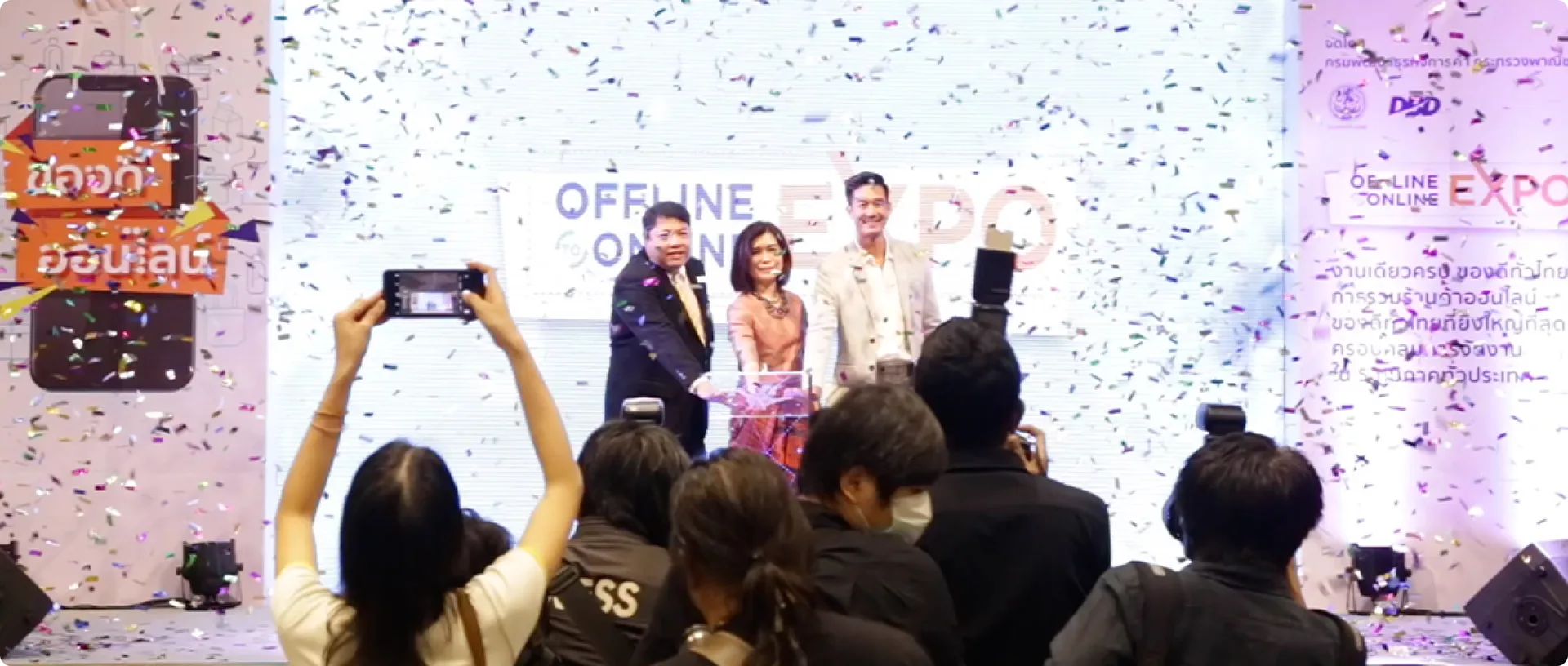 Department of Business DevelopmentOffline 2 Online ExpoA national expo of good products from across Thailand, held in turn in the north, south, east, west and northeastSee the case →
Related



One email a week
S-Curve Weekly
The week's signals and one deep read, chosen for leaders.
One email a week. Leave whenever you like.
Where is your business on its curve?
Talk it through with our growth team: a first conversation, no deck required.